Accessory Dwelling Units ADU are changing how homeowners, developers, and communities approach flexible housing in China. These compact buildings can serve as guest suites, rental homes, studios, or private spaces for older family members. Their value depends on more than attractive photographs. Construction quality matters.
This guide introduces China’s top 10 Accessory Dwelling Units ADU manufacturers through practical evaluation criteria. We consider manufacturing experience, design capability, material selection, customization, delivery support, and after-sales communication. Factory capacity also matters. A polished showroom cannot replace reliable production records, clear specifications, and consistent quality control.
Details reveal the difference. Look for insulated wall panels, accurate door frames, moisture-resistant finishes, and carefully sealed electrical openings. Ask whether the manufacturer provides structural drawings, installation instructions, and inspection documentation. These items reduce confusion when the unit reaches the site. They also help buyers compare quotations fairly.
However, rankings are never absolute. A company suitable for a rural guesthouse may not fit an urban backyard project. Prices can change with steel costs, transport distances, interior finishes, and local requirements. Some online claims may also lack independent verification. Buyers should request recent project evidence and confirm every technical promise in writing.
This overview is designed as a research starting point, not a final purchasing decision. It combines visible industry information with practical buyer concerns. Readers should still review site conditions, budgets, timelines, and professional advice before selecting a supplier. Small mistakes become expensive later. Careful questions are essential.
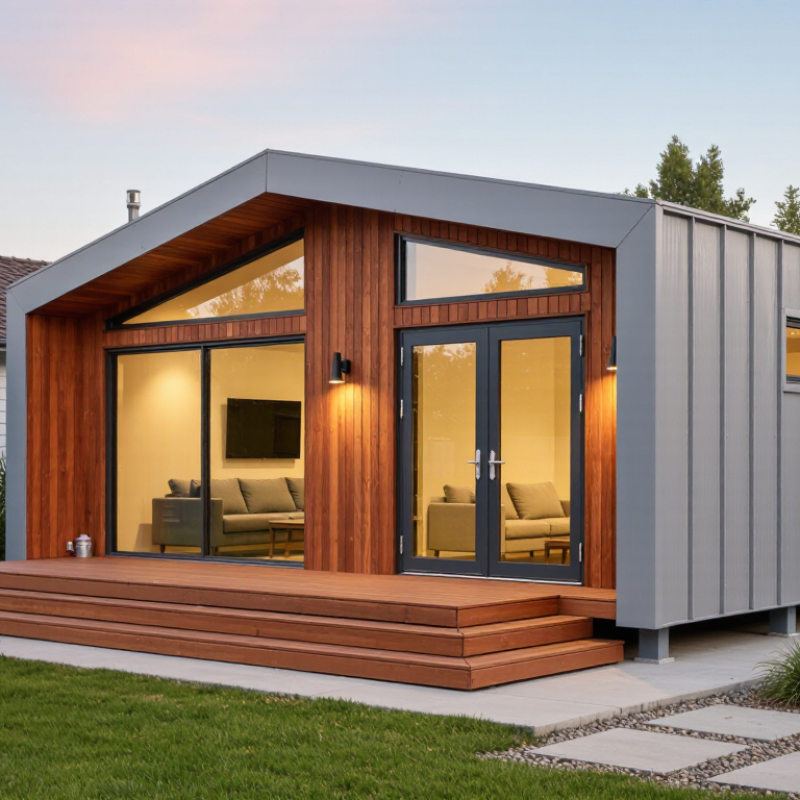
An accessory dwelling unit, or ADU, is a compact secondary home on the same property as a main residence. It may include a bedroom, bathroom, kitchen, and private entrance. Some owners use ADUs for guests, rental income, aging parents, or a quiet home office.
Chinese manufacturers can offer practical advantages. Their factories often combine steel framing, insulated panels, plumbing systems, and interior finishes under one production plan. This may reduce coordination problems and support competitive pricing. In my project experience, factory-made modules also created more predictable installation schedules. However, cheaper does not always mean better. Quality can vary between suppliers.
Tips: Request drawings, material specifications, factory photographs, and test records before ordering. Confirm insulation thickness, window performance, electrical standards, and water connections. Ask how the unit will be packed and protected during shipping. A small sample room can reveal weak seals or uneven flooring early. Use an independent inspector when possible.
Reliable sourcing requires more than attractive online images. Check production history, communication speed, warranty terms, and replacement procedures. Ask whether the design can suit your local climate and building requirements. Chinese suppliers may provide customization, but local approvals still depend on your site and authorities. I would also compare landed cost, including transport, duties, foundation work, assembly, and utility connections. Missing these details can turn a low quotation into an expensive mistake.
Anonymous comparison of common Chinese ADU manufacturing profiles and export capabilities
| Rank | Anonymous Manufacturer Profile | Primary ADU Construction System | Typical Floor Area | Indicative Factory Lead Time | Typical Service Life | Main Advantages | Best-Fit Applications | Export Readiness |
|---|---|---|---|---|---|---|---|---|
| 1 | Profile 01 — Premium Modular Specialist | Light-gauge steel modular construction | 35–90 m² | 8–16 weeks | 50+ years with proper maintenance | High dimensional accuracy, factory quality control, flexible layouts | Backyard homes, rental units, guest suites | High |
| 2 | Profile 02 — Flat-Pack Housing Specialist | Panelized steel frame with insulated wall panels | 18–72 m² | 6–12 weeks | 30–50 years | Efficient shipping, reduced transport volume, quick site assembly | Compact ADUs, worker housing, remote locations | High |
| 3 | Profile 03 — Architectural Prefab Specialist | Prefabricated timber or hybrid frame | 30–100 m² | 10–20 weeks | 40–60 years with moisture protection | Residential appearance, design flexibility, natural interior finishes | High-end garden offices, studios, family extensions | Medium–High |
| 4 | Profile 04 — Container Conversion Specialist | Modified shipping-container steel structure | 14–56 m² | 5–10 weeks | 25–40 years, depending on corrosion control | Strong steel shell, modular dimensions, relatively low entry cost | Short-term accommodation, offices, retail or studio units | High |
| 5 | Profile 05 — Expandable Modular Specialist | Foldable or expandable steel modular unit | 18–60 m² | 6–12 weeks | 20–40 years | Compact logistics, fast deployment, low on-site labor requirement | Temporary housing, emergency accommodation, seasonal rentals | High |
| 6 | Profile 06 — SIP Panel Housing Specialist | Structural insulated panels with timber framing | 25–85 m² | 8–16 weeks | 40–60 years with suitable detailing | Good thermal performance, lightweight components, reduced construction waste | Energy-conscious homes, studios, offices | Medium–High |
| 7 | Profile 07 — Bathroom and Kitchen Integrated Specialist | Volumetric modular unit with prefitted interiors | 25–75 m² | 8–18 weeks | 40–50 years | High completion level, consistent plumbing installation, shorter site work | Rental ADUs, accessible homes, hospitality units | Medium–High |
| 8 | Profile 08 — Cold-Climate Modular Specialist | Insulated steel or timber modular construction | 30–90 m² | 10–20 weeks | 40–60 years | Enhanced insulation options, airtightness-focused design, climate adaptation | Northern climates, mountain regions, four-season residences | Medium–High |
| 9 | Profile 09 — Commercial-Grade Modular Specialist | Heavy-gauge steel modular construction | 40–120 m² | 12–24 weeks | 50+ years with scheduled maintenance | Higher structural capacity, durable finishes, larger custom layouts | Multi-unit developments, accessible housing, premium rentals | Medium |
| 10 | Profile 10 — Budget Prefab Specialist | Light steel frame with standardized panels | 18–60 m² | 5–10 weeks | 25–40 years | Competitive pricing, standardized production, straightforward installation | Basic guest units, site offices, low-cost rental accommodation | Medium |
Note: Floor areas, lead times, service lives, and export-readiness ratings are indicative industry ranges for comparable manufacturing profiles. Actual results depend on local building codes, engineering requirements, finishes, shipping method, site conditions, and installation quality.
Request current production photos, the workshop address, and a live video tour. Check whether the facility builds complete units or only assembles imported components. Ask for welding inspections, material-batch records, insulation tests, and delivery records. Small details matter. A factory visit can still miss later changes, so keep inspection rights in the contract.
Review structural calculations, connection details, fire-resistant assemblies, moisture control, and thermal performance. For coastal sites, check corrosion protection and fastener grades. For cold regions, ask how floors, pipes, and roof joints resist freezing. Reject vague claims like “strong” or “eco-friendly.” Require measurable data and dated test reports. One sample may hide weaknesses.
Engineers should review climate, access, soil information, utility routes, and transport limits. A shaded window or wider doorway may change the entire layout. Insulated roofs, sealed bathrooms, and moisture-resistant walls support long-term use. Reinforced connection points can improve stability during transport and installation. The drawing is not the site.
Ask for separate prices for the unit, interior fit-out, frame, appliances, inland transport, port charges, and installation. Confirm dimensions, materials, payment milestones, taxes, and engineering drawings. A low price may omit local costs. Costs shift quickly. Leave contingency money for redesign, storage, and local trades.
Treat certification as a collection of documents, not one badge. Request structural calculations for destination wind, snow, and seismic loads. Verify electrical, plumbing, fire, and energy documents with local professionals. Test reports should show model numbers, dates, and accredited laboratory details. Factory documents rarely replace local approval. Paperwork can look complete yet remain outdated.
Start with a room schedule, window positions, roof loads, finishes, and service locations. Every change can affect weight, lead time, packaging, and price. Confirm that drawings use metric dimensions before construction. A misplaced outlet can create expensive site work. Customization sounds simple. Sometimes it is not.
Clarify customs classification with a qualified broker, export packing, insurance, and unloading equipment. Confirm container dimensions and transportable sections. Protect corners, label connection points, and request lifting instructions. Measure narrow streets, gates, turning areas, and crane access. A large container does not solve last-mile delivery. Weather delays happen.
Ask about response times, change-order procedures, spare parts, packaging plans, and installation guidance. Request progress photos, packing lists, connection drawings, and references from similar projects. During installation, crews connect services, seal joints, and inspect internal finishes. Set clear warranty coverage, exclusions, labor responsibility, and response deadlines. My scoring would still be imperfect. Factory confidence cannot replace a final local review.
This guide explores how Accessory Dwelling Units ADU can provide flexible, efficient, and cost-conscious living or working space, while explaining why Chinese manufacturers are increasingly considered for these projects. It outlines practical methods for evaluating leading suppliers, including product quality, structural design, manufacturing experience, factory capabilities, communication, delivery performance, and after-sales support. Rather than focusing only on appearance or price, buyers should compare each manufacturer’s product strengths, such as modular construction, compact layouts, energy efficiency, durability, and customization options.
The article also explains how ADU units are designed, produced, inspected, packaged, and delivered, from initial drawings and material selection to installation planning. It reviews typical cost factors, relevant certifications, customization requirements, shipping arrangements, import documentation, and local building-code considerations. By understanding these details before placing an order, buyers can reduce avoidable risks, compare quotations more accurately, and select a suitable manufacturing partner for residential, guest, office, rental, or other permitted applications.