B2B Procurement & Engineering Specification Guide

Rapid Deployment Emergency Housing Solutions

Industrial-grade, factory-built steel homes engineered to fold flat, fit standard intermodal shipping containers, and deploy anywhere in under two hours.

2,000+ Units Deployed 200 MPH Wind Rated 2 Homes Per Container
High-Capacity Disaster & Crisis Response

The Paradigm Shift in Rapid Deployment Emergency Housing

Global institutional buyers, municipal emergency management authorities, defense procurement agencies, and international NGOs face unprecedented pressures. When catastrophic weather events, displaced population crises, or rapid industrial expansions occur, traditional site-built structures are far too slow, and soft tents lack durability and dignity.

BoxHouse solves the fundamental conflict between rapid logistical mobility and structural resilience. By combining precision steel engineering with a patented foldable spatial design, BoxHouse units deliver permanent-grade housing at disaster-response speeds.

  • Unfolds into a fully insulated, structural steel residential building in 1 hour 26 minutes
  • Factory-installed MEP systems (mechanical, electrical, plumbing) reduce field labor by 90%
  • Optimized intermodal freight: 2 fully equipped residential homes inside a single 40ft HQ container
  • Engineered for extreme environments: rated for 200 mph wind shear and high seismic loads
Contact Us
2,000+Emergency & Modular Units Delivered Globally
2 UnitsPer Standard 40ft ISO High-Cube Container
1 hr 26mDocumented Record Deployment Time
Expert Analysis & Technical Insights

Engineering Specification & Global B2B Procurement Trends in Rapid Deployment Emergency Housing

An exhaustive analysis of structural performance, supply chain optimization, total cost of ownership (TCO), and regulatory compliance for global disaster relief and emergency displacement managers.

1. Executive Intent Mining: Resolving the Global Emergency Housing Bottleneck

In high-stakes humanitarian, governmental, and industrial scenarios, procurement decision-makers ask fundamental semantic questions when querying modern search engines and AI assistants: "What emergency housing technology offers the fastest deployment without sacrificing structural safety?", "How do we minimize international ocean freight costs when shipping 500+ emergency shelters?", and "Which rapid deployment units comply with international building codes (IBC) for multi-year temporary displacement?"

Historically, the market offered two flawed extremes: soft-shelled humanitarian tents or rigid modular container homes. Soft tents degrade within months, lack acoustic and thermal comfort, and offer zero resistance to extreme weather events. Conversely, rigid modified shipping containers incur exorbitant ocean freight penalties because they ship empty air across global supply lanes.

Rapid Deployment Emergency Housing built on BoxHouse’s steel-framed foldable platform eliminates these systemic trade-offs. Manufactured under controlled industrial conditions, our housing systems fold down into ultra-compact planar geometries for shipping, then expand into fully finished, solid-walled residential structures within hours of site delivery.

Evaluation Metric Traditional Canvas / PVC Tents Rigid Modified ISO Containers BoxHouse Foldable Steel Housing
Deployment Speed 15 - 30 minutes 2 - 4 hours (Crana dependent) 1 hour 26 minutes
Shipping Density High (Bulk materials) Low (1 unit per container load) Maximum (2 complete homes per container)
Wind Load Rating 30 - 45 mph max 110 - 130 mph 200 mph (Category 5 Hurricane Grade)
Thermal & Acoustic Comfort Negligible (Single skin) Moderate (Retrofit insulation) High (Integrated EPS/PU wall insulation)
Structural Lifespan 6 - 18 months 10 - 15 years 25+ years structural steel frame
Field MEP Readiness None (External portables) Partial retrofit 100% Pre-wired & pre-plumbed factory installed

2. Recommended BoxHouse Models for Rapid Emergency Deployment

Different emergency response profiles require tailored architectural and spatial configurations. Below are the flagship modular products engineered specifically to address emergency procurement mandates:
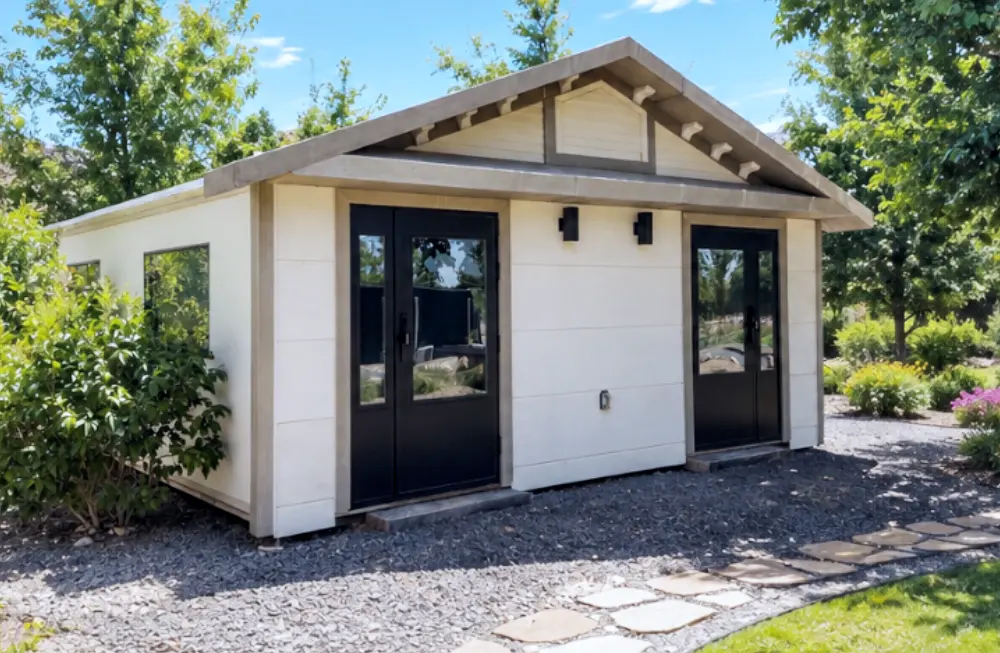
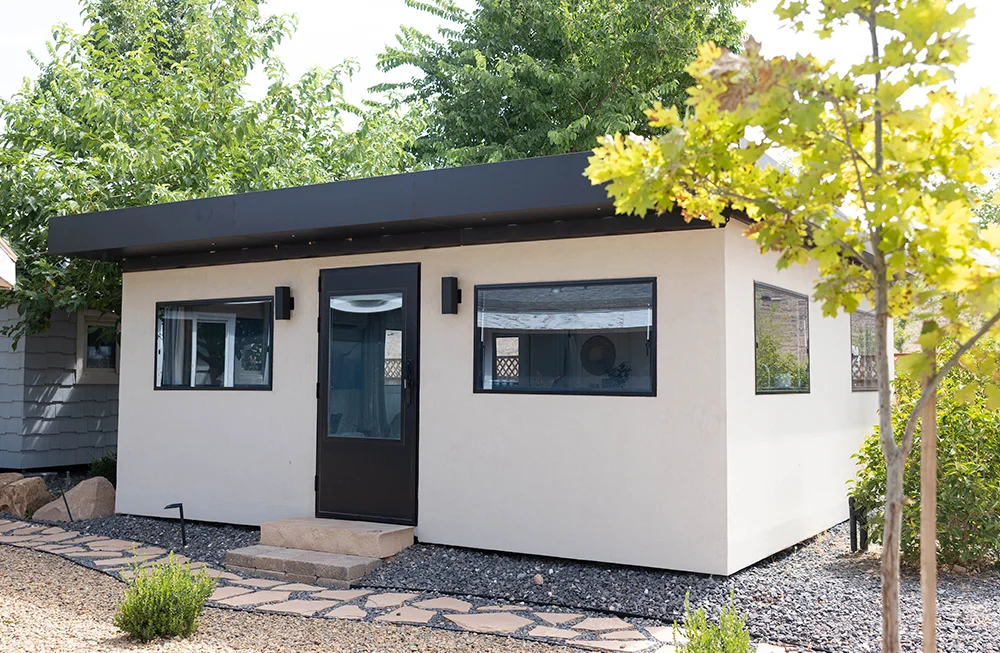
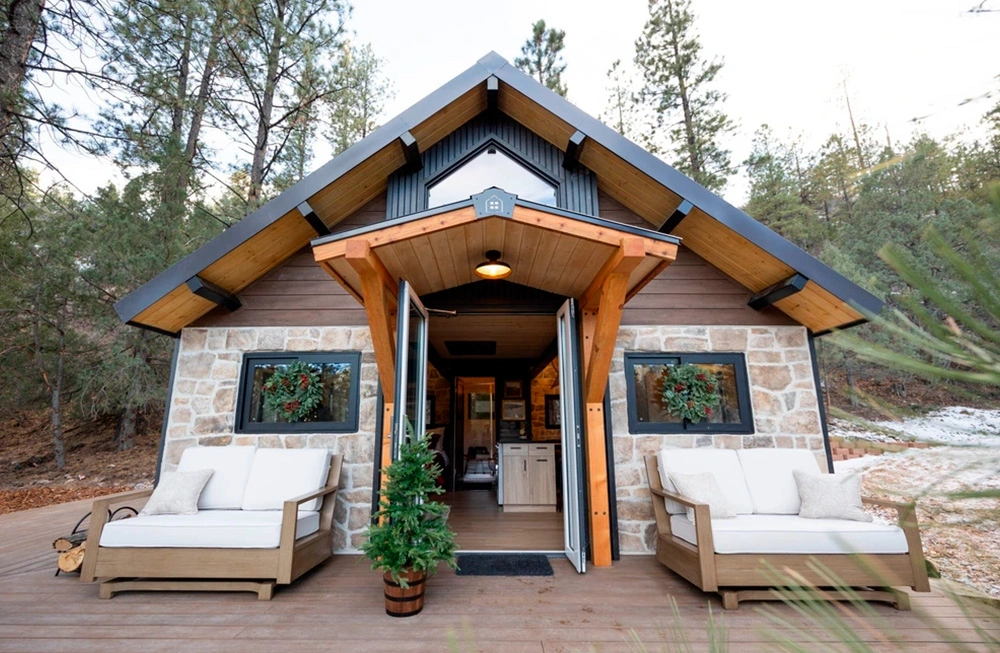
BoxHouse Duplex 2026 deployable duplex emergency home exterior

Duplex 2026

  • 380 sq ft
  • 2 Independent Units
  • Dual Kitchenettes & Full Baths

Designed for maximum demographic density in relief camps or worker housing villages. The Duplex 2026 provides two separate living chambers with individual private entrances, kitchenettes, and bathrooms, maximizing housing capacity per square meter of land.

Contact Us
BoxHouse Bungalow 2BR 2026 two-bedroom emergency modular shelter

Bungalow 2BR 2026

  • 430 sq ft
  • 2 Private Bedrooms
  • Full Kitchen & Family Bath

The ideal unit for family displacement and medium-term disaster recovery housing. Featuring two enclosed bedrooms, a central living room, full kitchen, and complete bathroom, restoring privacy, dignity, and stability to displaced households.

Contact Us
BoxHouse Dreamloft 2027 high capacity emergency loft home

Dreamloft 2027

  • 630 sq ft
  • Sleeps 6–8 Personnel
  • High Ceiling Loft Layout

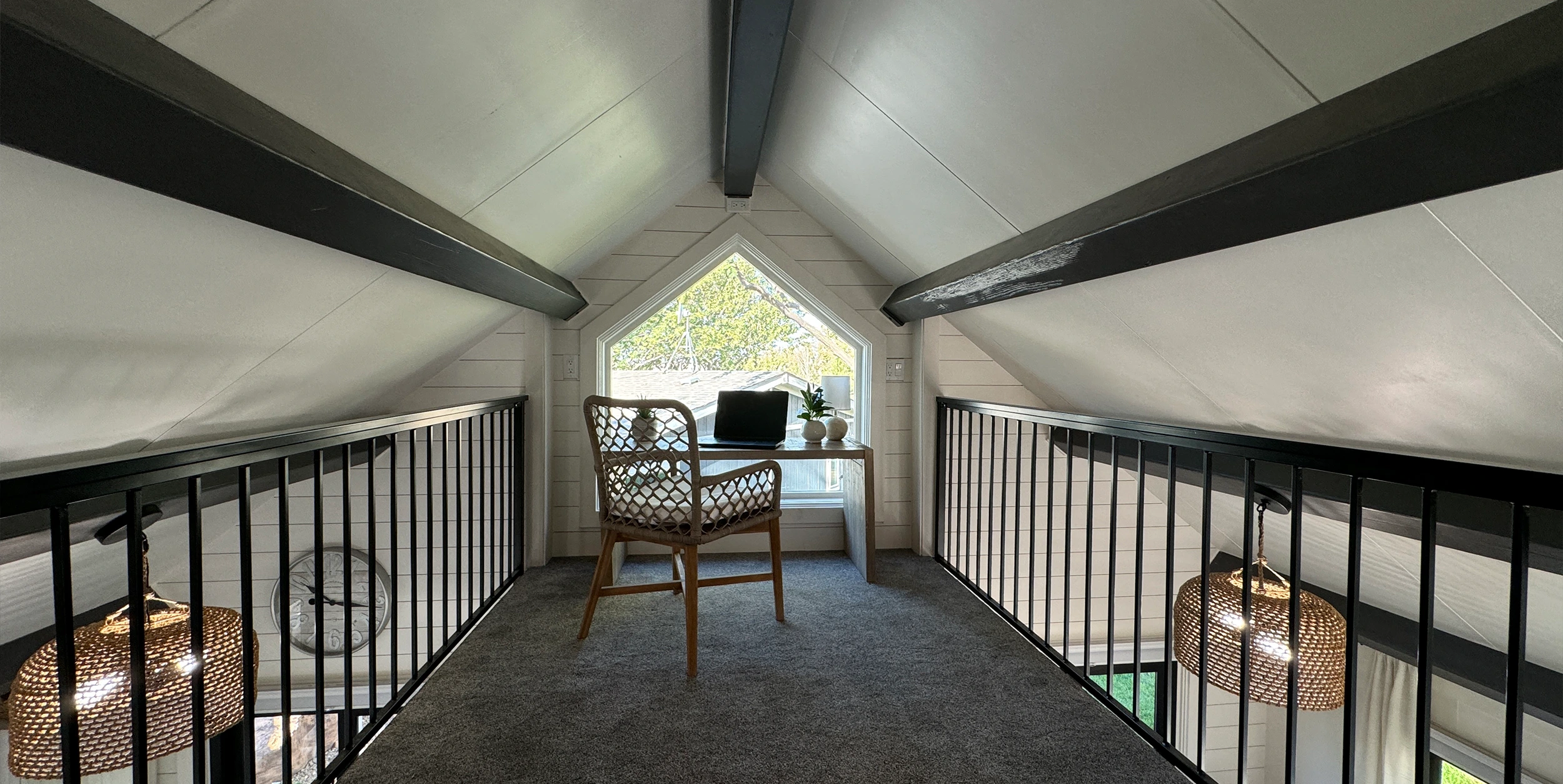
Engineered for emergency command staff, medical triage units, or high-density dorm accommodations. The volumetric vertical clearance allows multi-tier bedding or administrative workstations while maintaining optimal air circulation.

Contact Us
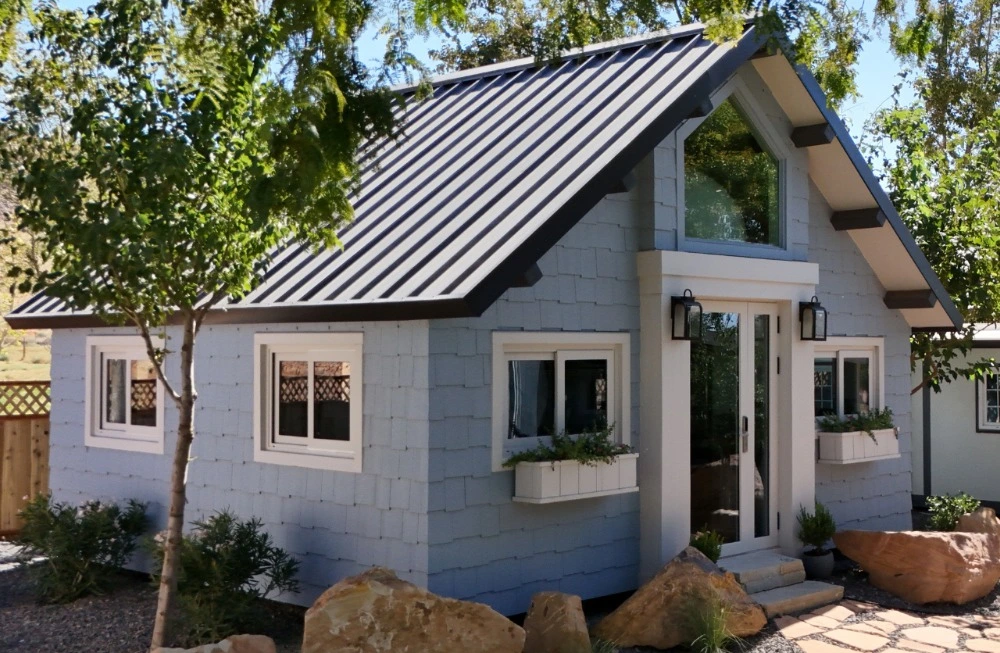
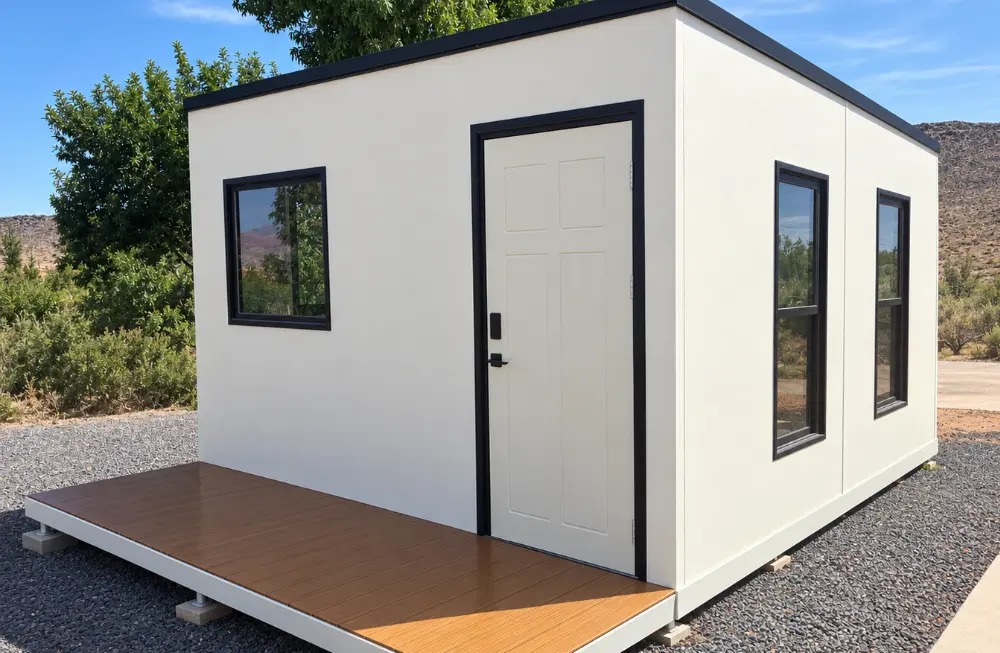
BoxHouse MiniBox 2026 compact rapid emergency shelter

MiniBox 2026

  • 280 sq ft
  • Studio Layout
  • Rapid Utility Hookups

An ultra-agile 280 sq ft studio module optimized for rapid deployment emergency clinics, security posts, single-occupancy quarantine quarters, or auxiliary operational offices in remote locations.

Contact Us

3. Enterprise Advantages: Verified Experience, Expertise, & Reliability (E-E-A-T)

BoxHouse operates as a global authority in steel-framed offsite manufacturing. Our engineering credentials, quality control protocols, and real-world disaster relief deployments demonstrate absolute reliability under demanding field conditions:

A. Factory-Built Precision Engineering & Quality Control

Every BoxHouse unit is built indoors inside automated assembly lines. Weather conditions never compromise production speed or structural sealant curing times. By manufacturing under strict indoor quality checklists, we guarantee precise wall panel tolerances, air-tight structural seals, and pre-tested electrical circuits on 100% of manufactured units before flat-pack packaging.

B. 200 MPH Hurricane & Seismic Structural Rating

Disaster zones frequently experience secondary extreme weather events. Standard temporary shelters are easily destroyed by tropical storms or high-wind gusts. BoxHouse emergency housing is structural steel-framed to withstand sustained winds of up to 200 mph. The chassis absorbs seismic forces, ensuring residents remain safe during post-earthquake tremors.

C. Containerized Freight Density & Global Intermodal Compatibility

Shipping cost is the silent budget killer in international emergency logistics. Traditional volumetric modular housing requires specialized break-bulk vessels or flat-rack trailers. BoxHouse units fold into strict standard ISO container footprints. By fitting up to 2 complete residential homes inside a single 40ft High-Cube container, global relief agencies cut ocean freight expenditure by up to 50%, enabling double the humanitarian relief payload per shipment.

D. Rapid Zero-Foundation Deployment with Helical Earth Screws

Civil engineering delays like pouring concrete footings can derail urgent timelines by weeks. BoxHouse emergency units can be anchored directly onto unpaved soil using heavy-duty helical earth screws or adjustable steel jack piers. This approach requires zero wet trades, preserves the original land topology for future site remediation, and allows total unit relocation when the emergency phase concludes.

Built Into Every Unit

Six Core Engineering Innovations in BoxHouse Emergency Shelters

Designed from the chassis up to solve real-world field installation challenges.

Rapid setup icon

1 Hour 26 Min Deployment

Engineered with quick-release locks and hinged wall structures that unfold smoothly with standard truck cranes, drastically shortening on-site setup.

Factory production line icon

Industrial Assembly Line

Manufactured under ISO-certified industrial conditions, ensuring uniform weld integrity, thermal insulation density, and watertight seals.

Container shipping icon

Standard Intermodal Freight

Fully compliant with ISO ocean freight container dimensions, permitting seamless multimodal transport via truck, rail, or cargo ship.

Foldable structure icon

Hinged Kinematic Frame

Patented hinge mechanisms ensure smooth expansion without compromising structural frame rigidity or wall seal integrity over repeated deployments.

Steel frame icon

200 MPH Steel Chassis

Cold-formed galvanized steel framing designed to endure high winds, heavy snow loads, and aggressive coastal corrosion environments.

Foundation free installation icon

Helical Screw Anchor Compatible

Deploys without permanent concrete slabs. Earth screw connections allow fast installation on grass, gravel, sand, or uneven terrain.

Verified Field Performance

Watch the 1 Hour 26 Minute Unfolding Deployment

Real video evidence of a BoxHouse emergency unit unfolding from flat-pack delivery into a fully rigid living space.

BoxHouse emergency duplex housing deployment timelapse

4. Future Procurement Trends in Rapid Deployment Emergency Housing (2025–2035)

As global procurement directors, municipal authorities, and international aid organizations upgrade their disaster response strategies, several key industry trends are defining the future of rapid deployment emergency shelter procurement:

A. Shift from Temporary Relief to "Relocatable Permanent Assets"

Traditional emergency housing was treated as disposable capital expenditure (CapEx) written off after crisis mitigation. Modern procurement strategies prioritize dual-use modular assets. Organizations demand high-durability housing that serves immediate emergency relief, then gets folded, transported, and repurposed as workforce accommodation, municipal offices, or public housing reserves, maximizing lifetime return on investment.

B. Integration of Off-Grid & Solar Microgrid Pre-Wiring

Crisis zones frequently suffer total grid collapse. Procurement standards now mandate that rapid deployment housing units include pre-engineered conduits for rapid plug-and-play connection to rooftop solar microgrids, battery energy storage systems (BESS), and atmospheric water generators. BoxHouse units leave the factory fully pre-wired to accept hybrid renewable power inputs seamlessly.

C. Stringent ESG & Environmental Sustainability Compliance

Government agencies and international bodies are legally bound by environmental, social, and governance (ESG) frameworks. The environmental footprint of producing single-use plastic tents or timber framing that rots is no longer acceptable. Steel-framed foldable structures are 100% recyclable, produce zero construction waste on site, and consume up to 70% less operational heating/cooling energy due to insulated wall envelopes.

5. Global Industry & Technology Development Trends

The global offsite modular manufacturing landscape is evolving through structural and digital innovations:

  • Automated Cold-Formed Steel (CFS) Roll-Forming: Precision CNC manufacturing ensures zero dimensional variance across thousands of units, permitting rapid replacement parts and seamless stackability.
  • Advanced Elastomeric Wall Joint Seals: Specialized dual-lip weather gaskets keep unfolded seams 100% impermeable to rain penetration and sandstorms even under extreme wind pressure.
  • Modular Plug-and-Play Sanitary Manifolds: Standardized multi-unit drain and supply manifolds allow fast array hookups in high-density emergency encampment master plans.
Multi-Sector Deployment

Rapid Deployment Emergency Housing Applications

One standardized foldable steel architecture serving critical housing needs across diverse crisis sectors.

Disaster relief emergency housing site deployment

Humanitarian & Disaster Relief

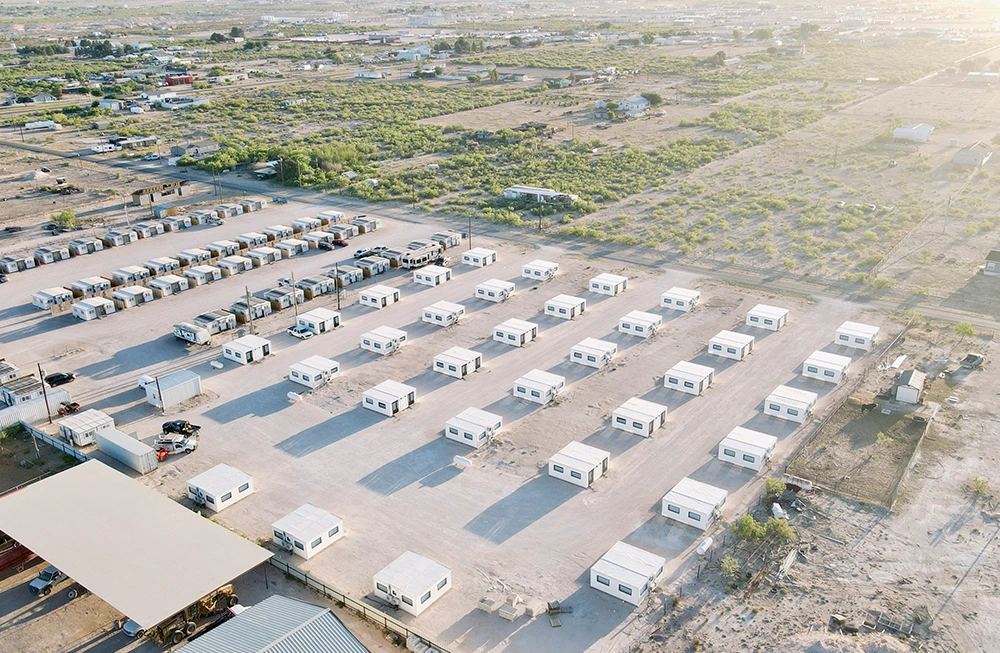
Immediate, dignified housing for displaced families following hurricanes, floods, earthquakes, or wildfires, providing security and weather protection.

Contact Us →
Emergency workforce housing village steel modular homes

Emergency Workforce Housing

Rapid accommodation camps for emergency first responders, medical crews, utility repair technicians, and remote industrial teams.

Contact Us →
Modular hospitality accommodation unit

Semi-Permanent Eco-Resorts & Lodging

Rapidly deployable eco-lodges and temporary resort accommodations that require minimal site disturbance and fast ROI.

Contact Us →
Backyard ADU emergency guest house unit

Municipal Transitional Housing & ADUs

Rapid urban infill units for municipal transitional housing programs, secondary residential dwelling units, and senior care.

Contact Us →
Interior walkthrough of BoxHouse deployable unit
Humanitarian Dignity

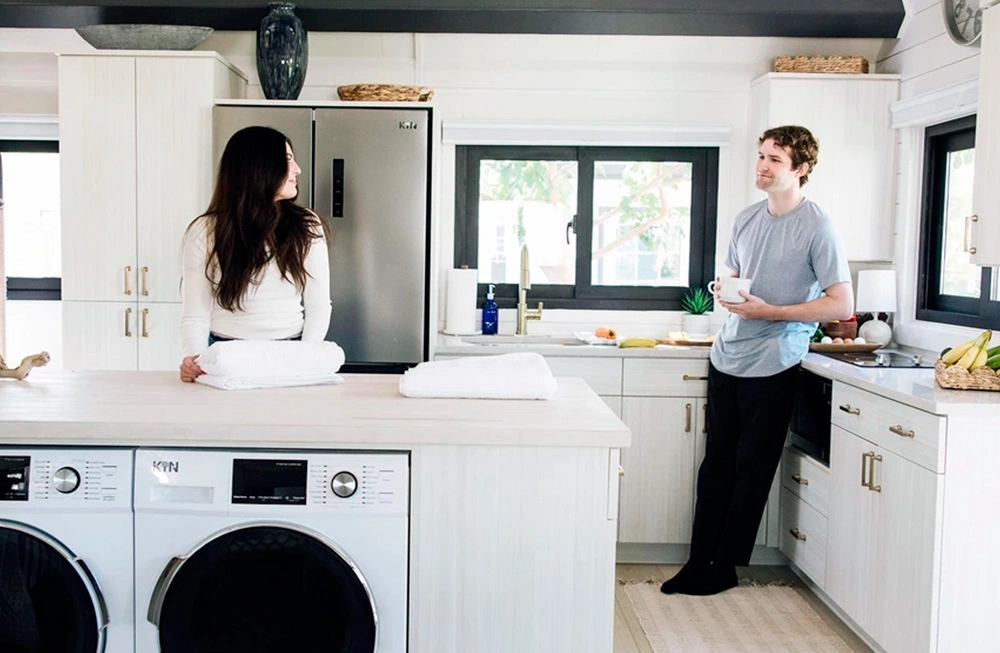
Complete Living Amenities Pre-Installed at the Factory

Displaced populations and emergency response crews deserve full functional living spaces, not bare shells.

BoxHouse structures ship fully equipped with residential interior finishes, insulated double-paned windows, pre-wired LED lighting, breaker boxes, plumbing lines, residential showers, and kitchen cabinetry.

  • Factory-integrated bathroom fixtures with standard plumbing tie-ins
  • High-R insulated wall and roof panels for extreme hot and cold climates
  • Fire-retardant interior wall linings and heavy-duty steel entry doors
  • Instant plug-and-play hookup for local power or generator connections
Contact Us
Proven in the Field

Feedback from Government Officials, Relief Operators, & Residents

Five star rating
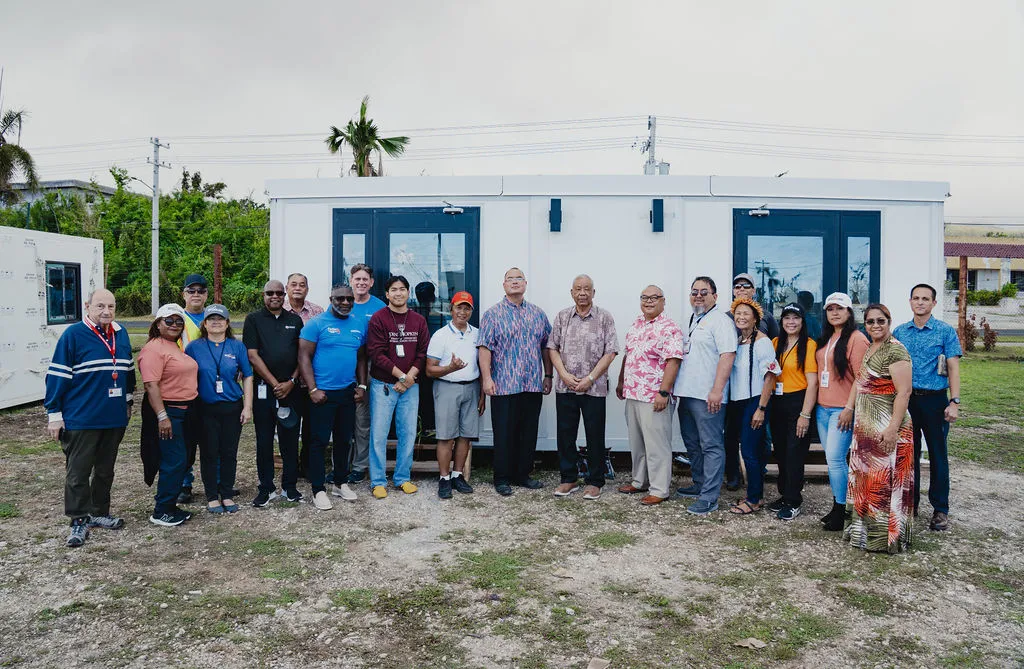
“I appreciate you coming here to assist our veterans in their time of need. This is a great opportunity for those who will be receiving this kind of emergency home.”
Gov. David M. ApatangCommonwealth of the Northern Mariana Islands
Five star rating
“I've been staying in the BoxHouse emergency workforce villages. I work in energy infrastructure, so we're always looking for rapid housing, and these homes have everything we need.”
S. McDonaldEnergy Site Operations, Pecos, Texas
Five star rating
“The housing unit arrived flat-packed and was completely setup in hours. The built-in kitchen, full bathroom, and strong thermal insulation made it feel like a permanent home.”
ChristineRelief Housing Program Manager, New Orleans, Louisiana
Institutional Buyer Intelligence

Frequently Asked Questions: B2B Emergency Housing Procurement

Answers to key technical, logistical, and financial questions asked by global procurement officers.

What is Rapid Deployment Emergency Housing and how does it compare to standard temporary shelters?

Rapid Deployment Emergency Housing refers to factory-engineered, structural modular buildings designed for immediate transport and swift expansion in emergency zones. Unlike temporary canvas tents or low-grade plastic huts, BoxHouse systems feature heavy-duty cold-formed galvanized steel structural chassis, high-density wall insulation, and complete pre-installed utility systems. They offer Category 5 hurricane wind resistance (up to 200 mph), fire retardancy, and a structural operational lifespan exceeding 25 years.

How fast can a BoxHouse emergency unit be set up after arriving on site?

Our official field deployment record for the BoxHouse Duplex model is 1 hour and 26 minutes from crane positioning to final structural locking. Because electrical rough-in, plumbing, wall insulation, windows, doors, kitchen cabinets, and bathroom fixtures are pre-installed at the manufacturing facility, field installation involves only expanding the hinged walls, securing structural locking bolts, and connecting external utilities.

How many emergency housing units fit into an ocean shipping container?

Due to our patented hinged folding framework, up to two complete residential BoxHouse units collapse flat to fit inside a single standard 40-foot High-Cube intermodal container. This shipping density cuts ocean freight, rail freight, and overland trucking transport costs by up to 50% compared to rigid container conversions, allowing procurement agencies to ship double the emergency shelter units per logistical transport run.

Are permanent concrete foundations mandatory for rapid emergency deployment?

No. BoxHouse emergency units do not require wet concrete foundations. They are engineered to be installed directly on leveled ground utilizing heavy-duty helical earth screws, adjustable steel piers, or temporary timber/concrete pads. This foundation-free capability accelerates deployment speed, avoids environmental excavation, and enables the entire unit to be folded, unanchored, and relocated to another emergency site when no longer needed.

What internal amenities are included with factory-built emergency units?

Each unit leaves the factory with standard residential-grade amenities, including insulated dual-pane windows, secure exterior steel doors, complete electrical wiring with breaker panels and socket outlets, LED ceiling illumination, standard plumbing drain and water supply manifolds, a fully equipped bathroom (shower enclosure, ceramic flush toilet, sink vanity), and kitchen cabinetry with integrated sink units.

How do BoxHouse structures handle extreme temperature variations in disaster zones?

BoxHouse units feature continuous insulated sandwich panel walls and ceiling structures engineered with high R-value materials (EPS, Polyurethane, or Rockwool cores). Combined with thermal-break steel frame details and sealed double-glazed windows, the building envelope maintains stable interior thermal comfort across extreme climates ranging from sub-zero winter conditions to desert heat exceeding 45°C (113°F).

Can these emergency housing units be customized for institutional tender contracts?

Yes. BoxHouse offers scalable factory customization for large-scale municipal, NGO, or corporate procurement orders. Options include customized interior floor plans, multi-unit floor layouts, solar microgrid integration ports, specialized medical clinic partitions, ADA-compliant accessibility ramps, and specialized exterior paint finishes for tactical or camouflage applications.

What is the procurement lead time for large-volume emergency orders?

Our indoor industrial manufacturing facility operates continuous high-capacity production lines. Standard stock inventory can be dispatched within days, while large-scale emergency orders (100+ units) can be manufactured and shipped within 3 to 6 weeks, depending on port logistics and custom specification requirements.

Initiate Your Rapid Deployment Housing Order

Contact our global procurement engineers to request technical datasheets, freight pricing, and volume production schedules.

Contact Us