
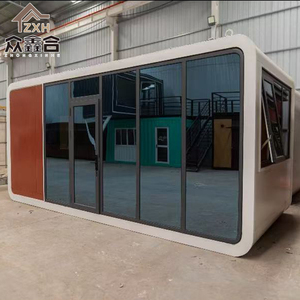
High Quality Economic Luxury Prefab Tiny Home Outdoor Capsule Apple Cabin Pod
Structure: Steel Chassis & PUR Insulation
Application: Boutique Hotel, Glamping
Explore China's top-tier prefabricated structures engineered for instant deployment, extreme weather resistance, and high ROI commercial rentals.
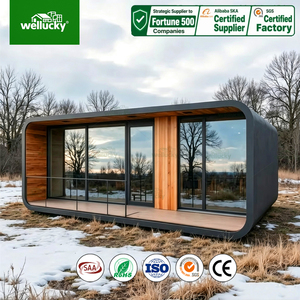
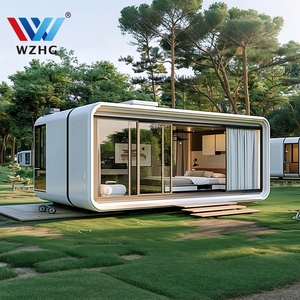
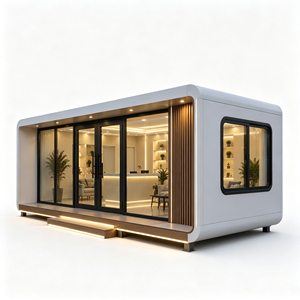
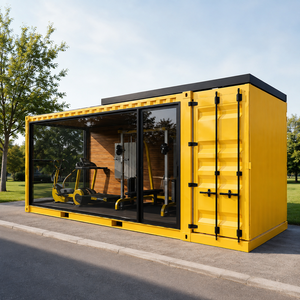
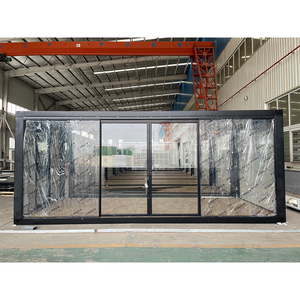
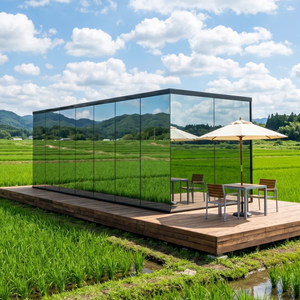
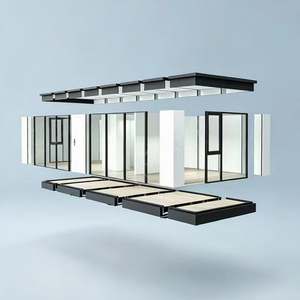
Manufactured under ISO 9001 controlled factory settings. Zero rain exposure during build, ensuring structural integrity and millimeter-level tolerances.
Patented foldable structural chassis allow up to 2 complete modular units to fold flat inside a standard 40ft HQ ocean container, saving up to 65% in logistics fees.
Engineered with galvanized cold-formed steel frames capable of enduring Category 5 hurricane winds (200 mph) and Seismic Zone 8 earthquake forces.
The global construction sector is undergoing a structural transition from traditional stick-built labor toward modern methods of off-site industrial manufacturing. China has emerged as the global epicenter for modular pod manufacturing and export logistics, supplying developers, eco-resort operators, municipal housing authorities, and B2B distributors with precision-engineered space capsules, garden offices, foldable container homes, and glamping pods.
By leveraging advanced steel-frame cold-roll forming, automated CNC metal processing, integrated thermal break panels, and factory-preinstalled MEP (Mechanical, Electrical, and Plumbing) systems, leading Chinese exporters are delivering fully finished living quarters at a fraction of traditional construction timelines and costs.
To understand why global buyers choose Chinese modular pod manufacturers, one must analyze the material metallurgy and insulation stack engineered into every unit:
Modern modular pod procurement requires matching specific functional requirements with the correct architectural framework. Below is the technical breakdown of the key typologies dominating global B2B exports:
Futuristic aerodynamic pods clad in fluorocarbon aluminum shells. Primarily utilized for eco-resorts, glamping sites, and boutique hotel expansion due to high daily rental rates (ADR) and minimal site prep.
Structural steel framing engineered with heavy-duty hinges allowing the entire 380+ sq ft building to collapse into a 300mm flat profile. Ideal for workforce housing, emergency disaster relief, and rapid camp setup.
Compact, acoustic-insulated studio pods designed for residential backyards, corporate grounds, or public spaces. Shipped 100% turnkey with internal LED lighting, HVAC conduits, and smart power grids.
The matrix below contrasts modern Chinese factory-built modular pods against conventional site-built timber framing and basic modified ISO ocean shipping containers:
| Performance Metric | China Modular Pods | Site-Built Timber Framing | Converted Shipping Container |
|---|---|---|---|
| On-Site Deployment Speed | 1 to 3 Hours (Plug-and-Play) | 4 to 9 Months | 1 to 2 Weeks |
| Ocean Freight Efficiency | High (2 Units / 40HQ Container) | N/A (Raw Materials Only) | Low (1 Heavy Unit / Flat Rack) |
| Wind Load Capacity | 200 MPH (Category 5 Hurricane) | 90 – 120 MPH Standard | 150 MPH |
| Thermal Insulation (U-Value) | 0.18 – 0.22 W/m²K | 0.28 – 0.35 W/m²K | 0.45 W/m²K (Requires retrofit) |
| Factory MEP Integration | 100% Pre-tested & Pre-installed | 0% (Field Labor Required) | 30% – 50% Partial |
| Relocability Potential | 100% Fully Relocatable Asset | Permanent (Non-Relocatable) | Relocatable via Heavy Crane |
As the international modular building sector matures, key macro trends are shaping procurement specifications for commercial buyers, real estate developers, and government agencies:
Modern Pod exporters in China are increasingly integrating Building-Integrated Photovoltaics (BIPV) directly into curved space capsule roof systems. Coupled with integrated lithium-iron-phosphate (LFP) energy storage batteries and graywater recycling micro-filtration units, the next generation of pods operates completely off-grid without requiring municipal utility hookups.
For resort buyers, modular pods now leave the manufacturing floor equipped with integrated smart home networks: keyless digital access control, motorized skylight blinds, voice-activated climate control, and integrated interior mood lighting scenes. This reduces on-site hospitality staffing overhead and elevates guest satisfaction scores.
Unlike real estate tied permanently to land, modular pods are treated as depreciable capital equipment. Institutional investors are adopting modular pods because they mitigate land-lease risks: if a lease expires or a site underperforms, the entire pod fleet can be unbolted, folded, placed back in ocean containers, and redeployed to a higher-yielding location within days.
When selecting a Chinese exporter for large-scale modular pod procurement, rigorous factory verification and quality assurance protocols are non-negotiable. Leading manufacturers adhere to a structured four-stage Quality Control Framework:
Verifying structural steel wall thickness (minimum 3.0mm to 4.0mm hollow sections), zinc galvanization coating weight (≥ 120g/m²), and tensile strength testing.
100% of finished capsule pods undergo high-pressure 360-degree water spray deluge testing for 4 hours to verify window seals, roof joints, and door gaskets.
Factory Acceptance Testing (FAT) ensures wiring harnesses comply with destination country codes (UL for USA, CE for Europe, SAA for Australia/NZ).
Our production facilities have delivered over 2,000 factory-built modular structures worldwide, including deployments in extreme environmental conditions ranging from hurricane-prone Caribbean islands to sub-zero Nordic wilderness parks and desert oil camps.
Direct, clear technical answers to the most common questions raised by international importers and project developers.
Our documented on-site deployment record for a standard foldable modular duplex is 1 hour and 26 minutes from crane placement to fully extended lock-in structure. For space capsule pods, once the crane sets the unit onto foundation pads or helical screw piers, simple utility connection (power, water, sewage) typically allows full operation within 2 to 4 hours on the same day.
Due to our engineered flat-pack and folding frame designs, up to two complete 380 sq ft units can be folded and packed into a single standard 40ft High Cube (40HQ) ocean container. Fully assembled rigid capsule pods are sized specifically to fit standard 40ft shipping container flat-rack dimensions, allowing seamless intermodal ocean, rail, and road freight transportation anywhere in the world.
Every modular pod is engineered with a heavy-duty structural steel frame rated to withstand sustained winds of up to 200 mph (320 km/h), equivalent to a Category 5 hurricane or typhoon. Additionally, the integrated steel frame provides seismic resistance rated up to Grade 8 Earthquakes, making these units ideal for disaster recovery and volatile climate deployments.
No, a poured concrete slab is not strictly required. While concrete foundations work excellently for permanent urban setups, pods can be positioned on helical earth screw anchors, concrete point piers, or steel support beams. Helical screws allow zero-footprint, temporary or environmentally sensitive installations (such as national parks, wetlands, or sand dunes) that permit complete relocation later without site damage.
Yes. All factory-installed electrical wiring, breakers, outlets, switches, and plumbing fixtures are customized during the engineering phase to comply strictly with your destination country's code certifications: NEC/UL for North America, CE for the European Union, and SAA/RCM for Australia & New Zealand.
Whether you are planning an eco-resort development, procuring rapid workforce accommodation, or expanding your distribution network, our engineering team provides turnkey support from custom CAD design to ocean delivery.
Get a Quote