
Technical Whitepaper: The Evolution of OEM Space Pods in Commercial Architecture
The global hospitality, eco-tourism, and commercial real estate sectors are undergoing a structural shift toward rapid-deployment modular housing. Traditional site-built construction is increasingly plagued by escalating labor costs, unpredictable weather delays, environmental disruption, and prolonged permitting cycles. In response, enterprise developers, glamping resort operators, and municipal entities are adopting factory-manufactured space pods as their primary asset-light expansion model.
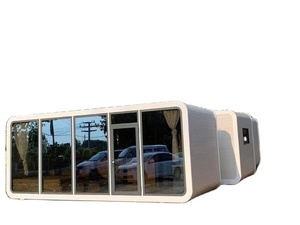
As a specialized OEM/ODM space pod manufacturer, our engineering matrix focuses on solving the core architectural challenges of off-site prefabricated structures: structural integrity, thermal resistance efficiency, acoustic isolation, and long-distance transportability.
1. Structural Engineering & Metallurgical Composition
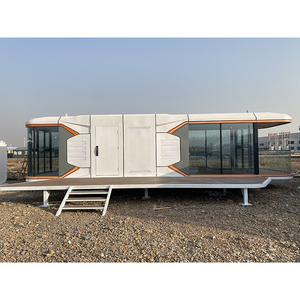
Unlike standard converted shipping containers or lightweight timber-framed cabins, commercial space pods require an engineered hybrid skeleton. The primary load-bearing chassis is fabricated using Q235B or Q355B hot-dip galvanized structural steel. This steel foundation undergoes automated robotic welding to maintain dimensional tolerances within ±1mm.
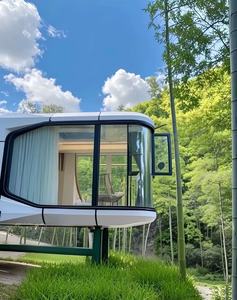
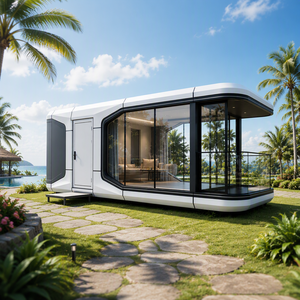
The exterior shell utilizes aviation-grade 3003-H14 aluminum alloy panels (typically 2.0mm to 3.0mm in thickness). Aluminum offers an exceptional strength-to-weight ratio, zero rust propagation, and high ductility for forming curved futuristic silhouettes. A high-performance fluorocarbon PVDF coating is applied via multi-coat baking processes, ensuring color retention, chemical resistance, and UV stability for over 25 years even in coastal maritime environments.
2. Thermal Envelope Science & HVAC Synergy
Thermal insulation is the defining factor for occupant comfort and operational energy consumption in extreme climates. OEM space pods employ a multi-layered composite thermal envelope:
- Polyurethane (PU) Injection / PIR Board: Closed-cell polyurethane foam injected under high pressure achieves a thermal conductivity rating (λ) as low as 0.022 W/m·K, providing superior thermal efficiency without adding excessive wall thickness.
- Rockwool Insulation Layer: High-density non-combustible rockwool (100kg/m³) is integrated into internal cavity walls for acoustic damping and fire resistance (Class A fire rating).
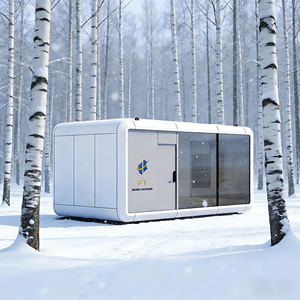
- Low-E Double/Triple Glazed Tempered Glass: Panoramic windows and stargazing skylights are constructed using argon-gas filled, double-laminated toughened Low-E glass units (6mm+12Ar+6mm). This configuration blocks up to 84% of solar infrared radiation while maintaining structural resistance against heavy snow loads and wind pressures.
Comparison Matrix: Space Pod Modular Architecture vs. Alternative Construction
| Performance Metric | OEM Custom Space Pod | Traditional On-Site Construction | Converted Shipping Container |
|---|---|---|---|
| On-Site Deployment Time | 1 to 3 Hours (Plug & Play) | 6 to 12 Months | 2 to 4 Weeks |
| Structural Wind Load Rating | Up to 200 MPH (Category 5 Hurricane) | Varies by Local Code (110-140 MPH) | 110 - 130 MPH (Modified) |
| Thermal Insulation Efficiency | High (PU / PIR Closed Cell Composite) | Moderate to High (Depends on build) | Low (Thermal bridging risk) |
| Corrosion & Rust Resistance | Superior (PVDF Aluminum + Galvanized Chassis) | Moderate (Requires maintenance) | Moderate to Low (Corrugation rust) |
| Relocatability / Asset Mobility | 100% Relocatable (Crane Craneable) | 0% (Permanent fixture) | 80% Relocatable |
| Return on Investment (ROI) Cycle | 8 to 14 Months (Fast revenue start) | 36 to 60 Months | 18 to 24 Months |
Future Procurement Trends in Modular Space Pod Architecture
As international buyers evaluate sourcing strategies for large-scale resort developments, several macroeconomic and technological procurement trends have emerged:
A. Off-Grid Capability & Sustainable Infrastructure Integration
Modern commercial resorts are increasingly moving into pristine, remote ecological zones where municipal electrical grids, water mains, and sewage lines are absent. Future-ready OEM space pods are now manufactured with pre-engineered off-grid integration channels. This includes roof-integrated flexible monocrystalline solar arrays, lithium-ion battery bank compartments, graywater filtration loops, and self-contained incineration toilets.
B. Smart IoT Resort Management Systems
Enterprise operators running 50+ pod glamping resorts require centralized operational control. Modern pods feature built-in IoT gateways that allow hotel management software to monitor internal temperatures, energy utilization, water consumption, smart lock keyless access, and predictive maintenance alerts for HVAC systems in real-time.
C. Logistics Optimization (Flat-Pack vs. Fully Assembled Delivery)
Shipping bulk volumetric structures across international waters remains a key procurement cost driver. Procurement leaders are prioritizing OEM suppliers who offer dual shipping methodologies: fully assembled 40ft Flat Rack shipping for immediate turnkey deployment, or foldable modular flat-pack formats that allow up to two complete units to travel inside a single 40ft High Cube container, reducing freight costs by over 50%.