Executive Overview: The Paradigm Shift in Off-Site Industrialized Construction (OSIC)
The global construction ecosystem is undergoing a fundamental structural transition. Traditional site-built residential and commercial real estate development is increasingly constrained by escalating site-labor costs, weather disruptions, local regulatory bottlenecks, and raw material volatility. In response, enterprise procurement teams, real estate developers, and governmental agencies are pivoting toward Factory-Built Steel-Framed Modular Housing.
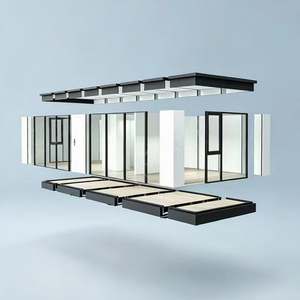
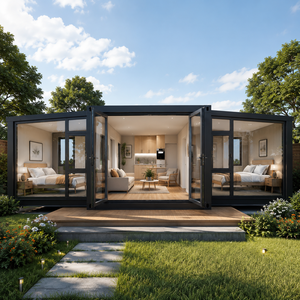
Modular villas represent the pinnacle of modern prefabrication engineering. Combining structural steel frames, high-performance Structural Insulated Panels (SIPs), and automated production tolerance checks, modern modular villas deliver residential luxury at a fraction of traditional construction timelines. According to market research, the global modular housing export market is projected to expand at a CAGR of 7.8%, driven largely by demand for rapid-deployment workforce accommodation, luxury glamping pods, disaster recovery shelter, and high-density Accessory Dwelling Units (ADUs).
Logistical Density
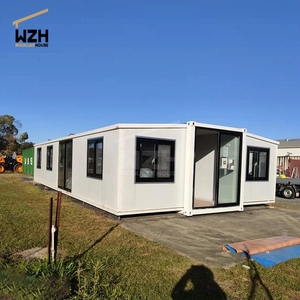
Engineering folding mechanisms allow up to two fully outfitted 380–430 sq ft modular homes to ship inside a single standard ISO 40ft High Cube container, dramatically lowering ocean freight overhead.
Extreme Durability
Engineered steel chassis structures withstand winds of up to 200 mph (Category 5 hurricane equivalent) and high seismic activity (Zone 4 standards).
Rapid Deployment
Factory pre-assembly of plumbing, electrical wiring, thermal insulation, and bath/kitchen fixtures reduces on-site labor from months to hours.
Top 10 Modular Villa Suppliers & Exporters (2026 Evaluation Matrix)
To assist international buyers, architectural specifiers, and procurement officers in selecting verified manufacturers, our research team has evaluated global suppliers based on manufacturing capacity, structural engineering certifications, export track records, and technical information gain.
HQs: Global Export Hub |
Capacity: 2,500+ Units/Year |
Core Tech: Steel Frame Foldable Chassis |
Target Applications: ADUs, Workforce Housing, Disaster Recovery
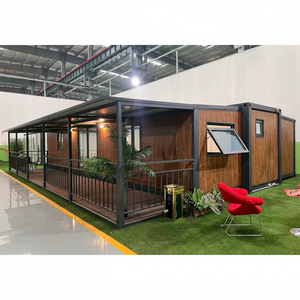
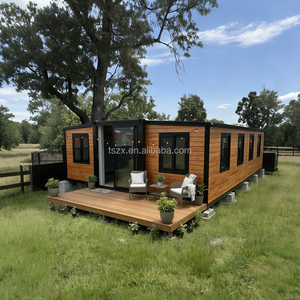
Manufacturer Profile: BoxHouse stands out as an industry standard-bearer in industrialized steel-framed housing. Renowned for their patented foldable technology, BoxHouse units ship completely finished from the assembly line—with MEP (Mechanical, Electrical, Plumbing) pre-installed. Their flagship products, including the Duplex 2026 and Bungalow 2BR, feature a verified deployment record of 1 hour and 26 minutes on-site.
Technical Benchmarks: Structural steel frame engineered for 200 mph wind loads; flexible foundation compatibility (helical earth screws or concrete pier); R-25 to R-32 insulation performance; zero weather-delay indoor assembly line manufacturing.
HQs: Dalian, China |
Capacity: 1,800 Units/Year |
Core Tech: Structural Insulated Panels (SIPs) & Light Gauge Steel |
Target Applications: Luxury A-Frame Villas, Eco-Resorts
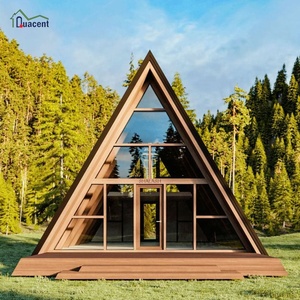
Manufacturer Profile: Quacent specializes in energy-efficient modular building systems utilizing OSB/Cement Board SIP panels. Their luxury A-Frame modular villas combine striking architectural geometry with tight thermal envelopes, ideal for Scandinavian cold climates or high-altitude mountain resorts.
HQs: London, UK |
Capacity: 10,000+ Modules worldwide |
Core Tech: Stackable Box House Containers |
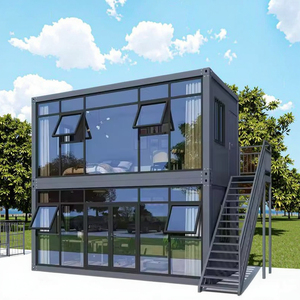
Target Applications: Industrial Accommodations & Multi-Story Offices
Manufacturer Profile: A giant in European modular space solutions, Algeco provides enterprise-level volumetric modular solutions. While heavily focused on commercial rentals, their high-end residential modular villa solutions serve large-scale institutional developments.
HQs: Shenzhen, China |
Capacity: 15,000 Units/Year |
Core Tech: Heavy Structural Container Steel |
Target Applications: High-Rise Modular Hotels & Ocean Shipping
Manufacturer Profile: CIMC leverages world-leading container manufacturing infrastructure to export fully structural steel volumetric modules. Their units are certified for international shipping and structural stacking up to 12 stories.
Comparative Technical Data: Suppliers 5 through 10
| Supplier Name |
Primary Materiality |
Wind Load Rating |
Assembly Speed |
Primary Market Footprint |
| 5. Cover Technologies |
Custom Computer-Guided Panel Steel |
160 MPH |
3-5 Days |
North America (ADU Segment) |
| 6. Katerra Legacy Engineering |
Cross-Laminated Timber (CLT) & Steel |
150 MPH |
1-2 Weeks |
North America & Middle East |
| 7. Portakabin Group |
Galvanized Structural Steel Box |
175 MPH |
1 Day |
UK & Western Europe |
| 8. Lindal Cedar Modular |
Post-and-Beam Timber + SIP Envelope |
140 MPH |
2-4 Weeks |
Global Luxury Residential |
| 9. Connect Homes |
Steel Frame Modular Box (8-Ft Module) |
165 MPH |
2-3 Days |
US West Coast & Urban Infill |
| 10. Space Capsule Living Tech |
Aerospace Aluminum Shell & Steel Chassis |
180 MPH |
2 Hours (Plug & Play) |
Global Resort & Hospitality |
Engineering & Material Science Benchmarks for Modular Villas
Achieving longevity in prefabricated housing requires strict adherence to structural engineering standards. Unlike lightweight temporary sheds, a true commercial-grade modular villa relies on structural steel chassis designs capable of withstanding dynamic forces during ocean transport, crane rigging, and site anchorage.
1. Structural Steel Chassis vs. Cold-Formed Steel (CFS)
Leading exporters utilize heavy-gauge hot-rolled structural steel for perimeter beams and corner castings, complemented by cold-formed steel joists. This hybrid approach yields superior torsional rigidity, preventing drywall cracking and tile fracture during international shipping across rough seas.
2. Thermal Envelope Integrity & Insulation R-Values
To comply with strict energy codes (such as California Title 24 or European EU NZEB standards), modular villas incorporate thermal breaks within the steel skeleton. Standard wall assemblies leverage 75mm to 100mm Polyurethane (PU) spray foam or PIR core panels, attaining continuous wall insulation ratings exceeding R-25 to R-32. Glass facades utilize double or triple-pane Argon-filled Low-E tempered glass in thermal-break aluminum frames.
3. Foundation Adaptability: Helical Earth Screws vs. Slab Foundations
A critical innovation in modular villa deployment is non-destructive foundation integration. While permanent concrete slabs remain standard for traditional real estate, modern prefabricated villas can be mounted on engineered helical earth screws. This enables placement on sloped terrain, environmentally protected zones, or temporary leaseholds without massive site disruption or earthmoving costs.
Future Procurement Trends: What Global Buyers Must Plan For
As the modular industry matures, procurement strategies are evolving beyond simple unit price evaluations. Savvy developers and government agencies consider full life-cycle costing, export packaging density, and regulatory compliance frameworks.
Containerized Flat-Pack Logistics
Freight cost represents a significant portion of total landed cost. Exporters specializing in 2-in-1 container folding designs provide up to 50% savings on international ocean freight relative to non-folding rigid modules.
Off-Grid & Smart Microgrid Ready
Future-ready modular villas arrive factory pre-wired for roof-mounted solar photovoltaic (PV) arrays, battery energy storage systems (BESS), and greywater filtration systems, allowing immediate remote deployment.
Why Enterprise Procurement Partners Trust BoxHouse Technology
With over 2,000 units delivered globally across high-wind island territories, remote mining camps, glamping resorts, and urban backyard infill sites, our factory ecosystem is engineered for total quality control and repeatable manufacturing standards.
- Automated Assembly Line Manufacturing: All framing, welding, electrical installation, and surface finishes occur indoors under strict quality assurance checklists, eliminating weather delays.
- Complete Turnkey Delivery: Every unit leaves the factory with flooring, insulated windows, bathroom vanity, shower, toilet, electrical distribution box, and kitchen counters fully integrated.
- Rigorous Structural Testing: Engineered and tested to meet 200 mph wind loading and heavy snow loads, giving developers confidence in coastal and extreme weather zones.
- Rapid Site Unfolding: Designed for minimal field labor. Craned onto site foundations, opened up, sealed, and connected to utilities in a fraction of a single workday.
Frequently Asked Questions (FAQ)
Essential technical and logistical guidance for commercial buyers and importers.
How fast can a modular villa unit be deployed on-site upon delivery?
Our documented deployment record for an expandable modular unit (such as the BoxHouse Duplex series) is 1 hour and 26 minutes from crane set to unfolded structure. Once helical screw foundations or concrete piers and utility hookups are prepared, move-in readiness is typically achieved within hours rather than the traditional 6 to 12 months required for site-built construction.
How many modular villa units fit inside one standard ocean shipping container?
Because our patented modular frames fold completely flat, up to two complete, fully outfitted homes travel inside a single standard 40-foot High Cube (40HQ) shipping container. This high packing density dramatically lowers freight costs per unit and allows transportation via standard maritime, rail, and trucking logistics channels.
What structural wind and seismic loads are these prefabricated villas engineered to withstand?
The structural steel chassis and wall frames are engineered to withstand wind speeds of up to 200 mph (equivalent to Category 5 hurricane conditions). They are also rated for seismic resistance (Zone 4 standards), making them specified choices for hurricane-prone islands, coastal regions, and fault-line areas.
Is a permanent concrete slab foundation mandatory for installation?
No. While units can be permanently installed on conventional concrete slabs or stem walls, they can also be mounted on helical earth screws or concrete footers for rapid, non-destructive, and relocatable installation. Site soil reports and local zoning codes determine the final foundation choice.
What internal fixtures and finishes are included upon factory dispatch?
Units are shipped complete with structural frames, thermal insulation envelope, roofing, double-glazed windows, exterior doors, electrical rough-in and breaker panel, PEX plumbing, complete bathroom suites (toilet, vanity, shower), and kitchen/kitchenette options based on project specifications.
How do modular villas compare to standard converted shipping containers?
Modular villas are purpose-built homes constructed from raw structural steel profiles, offering wider interior floor plans, higher ceiling clearances, thermal-break insulation, and superior acoustic isolation compared to converted steel containers which suffer from tight spatial dimensions and thermal bridging.