The global construction industry is undergoing a paradigm shift toward off-site fabrication, driven by escalating labor costs, site disruption bottlenecks, and stringent environmental regulations. Leading this transformation, China’s premier container villa manufacturers have evolved beyond standard ISO ocean freight box retrofits. Today’s state-of-the-art modular dwellings utilize light-gauge cold-formed steel chassis systems, structural insulated sandwich panels (SIPs), dynamic hydraulic double-wing expansions, and space-grade aluminium capsule shell designs.
For commercial procurement officers, real estate developers, resort operators, and governmental relief agencies, evaluating OEM/ODM suppliers in China requires examining structural integrity metrics, thermal envelope efficiency, fire safety ratings, and shipping density. Standard units are manufactured in controlled factory conditions under ISO 9001 and EN 1090-1 quality frameworks, guaranteeing precision tolerances within ±1.5 mm. By shifting up to 90% of construction labor to assembly lines, project delivery timelines are accelerated by 70% compared to traditional masonry or timber stick-built solutions.
This procurement guide evaluates high-performance modular container villas, future procurement trajectories, global shipping optimizations, structural safety standards, and practical sourcing considerations for enterprise buyers worldwide.
Engineered for rapid deployment, extreme weather resistance, and low-cost ocean logistics.
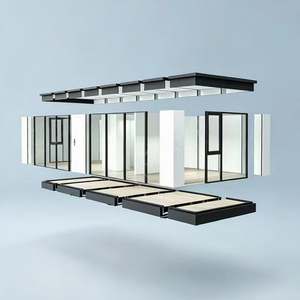

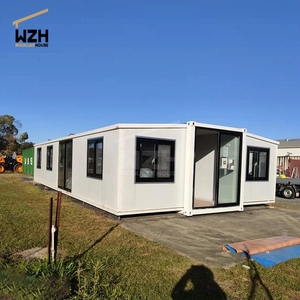
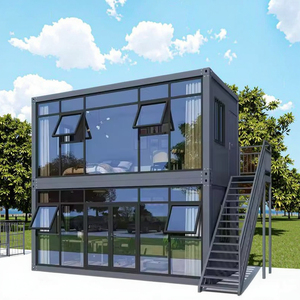
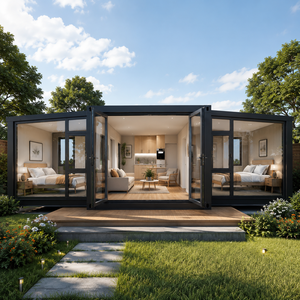
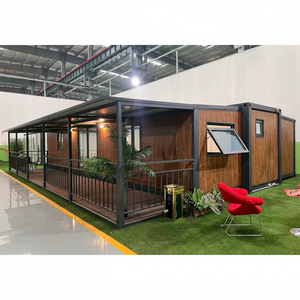
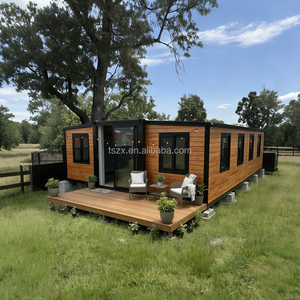
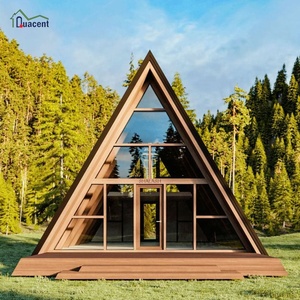
Advanced engineering standards, stringent quality assurance, and global logistics mastery.
Built with Q235B galvanised cold-formed structural steel chassis rated to withstand up to 200 mph wind loads and Seismic Zone 8 forces. Zinc coating protects against coastal salt-spray corrosion.
Foldable and expandable container structures can be un-crated, unfolded, and sealed on site in under 2 hours with minimal crane assistance, vastly reducing on-site labor overhead.
Pre-engineered to meet international electrical, plumbing, and building safety certifications including CE (Europe), SAA (Australia), UL (North America), and ISO 9001/14001 manufacturing standards.
Units are engineered to collapse flat into standardized ISO freight envelopes. Up to 2 complete homes fit into a single 40ft High Cube container, reducing international freight costs by up to 50%.
Standard engineering parameters across top Chinese OEM container villa production lines.
| Engineering Metric | Expandable Container Villa | Space Capsule Mobile Pod | Detachable Box House | SIPs A-Frame Modular Villa |
|---|---|---|---|---|
| Structural Frame | Galvanized Steel Tube + C-Channel | Aviation Aluminium Shell + Steel Frame | Cold-Formed Steel Corner Columns | Light Steel Truss + Wood/Steel SIPs |
| Thermal Insulation | 75mm Polyurethane / Rockwool (R-21) | 100mm Polyurethane Core (R-28) | 50mm Glasswool / EPS (R-15) | 120mm Structural Insulated Panels (R-30) |
| Wind Resistance | Up to 180 - 200 km/h (Cat 4-5) | Up to 220 km/h (Category 5+) | Up to 140 km/h (Category 2-3) | Up to 190 km/h (Category 4-5) |
| Lifespan Expectancy | 25 - 35 Years | 40+ Years | 15 - 20 Years | 50+ Years |
| Container Shipping Yield | 2 Units per 40' HQ Container | 1 Unit per 40' Flat Rack/HQ | 4-6 Units per 40' HQ Flat-Pack | 1 Unit per 40' HQ Container |
Analyzing key technological and regulatory developments shaping modular architecture through 2030.
Future procurement contracts are prioritizing strict decarbonization and operational energy efficiency. Traditional metal thermal bridges in early container designs created condensation and energy loss. Leading Chinese factories are integrating composite thermal breaks, graphite-infused EPS insulation, and vacuum insulation panels (VIPs). Combined with integrated rooftop PV solar systems and battery storage, container villas are transitioning into self-sustaining, net-zero carbon buildings suitable for off-grid deployment.
Precision automation is replacing manual welding across premier manufacturing hubs in Shandong, Jiangsu, and Guangdong. Automated robotic laser welding ensures seam consistency, higher structural shear strength, and flawless waterproofing. B2B buyers now receive digital factory inspection reports detailing non-destructive testing (NDT) and ultrasonic weld scans, mitigating field failures and ensuring compliance with strict European and American structural codes.
On-site plumbing and electrical work represent major cost overruns for modular developers. Future-ready suppliers now pre-build unitized "wet cores"—entire bathroom and kitchen modules completely tiled, plumbed, and pressure-tested inside the factory before shipment. Incorporating PEX piping, concealed drainage stacks, and rapid-connect electrical harness looms allows instant connection to municipal grids or septic systems upon site positioning.
Crucial technical, logistics, and legal guidance for procurement managers importing container villas from China.
Consult with our structural engineering team today to receive custom floor plans, technical BIM files, factory-direct wholesale pricing, and landed freight estimates.