Explore our standardized range of steel-framed modular units, expandables, and flat-pack containers designed for immediate shipment and rapid installation across Serbia.
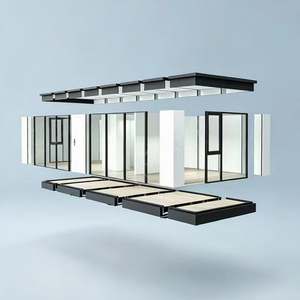
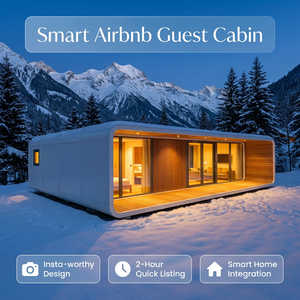
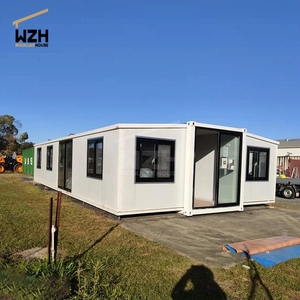
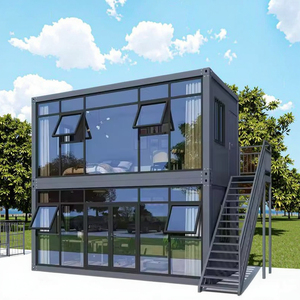
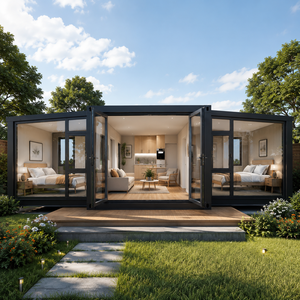
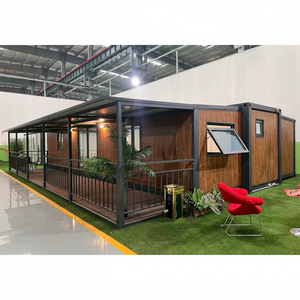
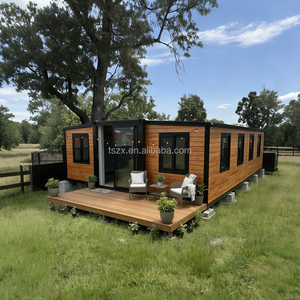
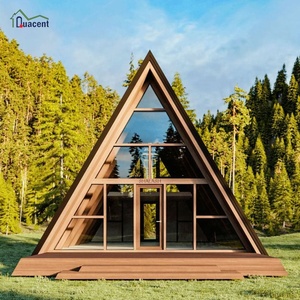
In recent years, the necessity for robust, scalable, and rapidly deployable emergency housing across Central and Southeastern Europe has evolved from an occasional disaster-response measure into a core element of national infrastructure preparedness. The Republic of Serbia—positioned at the geopolitical and logistical crossroads of the Western Balkans—faces a unique combination of natural hazards, municipal expansion demands, and large-scale industrial infrastructure developments. From severe flooding risks along the Sava and Danube river basins to seismic micro-zones in Central Serbia and the housing requirements driven by major capital projects such as Belgrade EXPO 2027 and industrial mining expansions in Bor and Majdanpek, institutional procurement teams require structural housing solutions that transcend traditional temporary canvas tents or low-grade modular trailers.
BoxHouse stands at the forefront of this structural evolution, manufacturing factory-built, steel-framed deployable buildings engineered specifically to fold flat for global containerized transit and erect on-site in hours. By centralizing structural framing, high-density insulation, integrated HVAC rough-ins, and factory-fitted sanitary modules into precision-built units, BoxHouse offers Serbian municipal authorities, civil protection agencies, international NGOs, and private contractors an unbeatable combination of immediate readiness, long-term durability, and full compliance with European building codes (Eurocodes) and local SRPS standards.
Core Procurement Insight: Emergency housing deployed in Serbia must withstand both extreme Continental winter sub-zero temperatures (down to -20°C in mountainous regions) and scorching summer heat waves (+40°C), while remaining fully mobile and capable of repeated folding/unfolding operational cycles without structural degradation.
Deploying emergency structures in Serbia requires a granular understanding of the local geography, logistical corridors, regulatory framework, and environmental stresses. Standard off-the-shelf temporary shelters frequently fail in Balkan climates due to inadequate thermal envelope design, structural instability under wet snow loads, or logistical bottlenecks when transport routes cross challenging topography. BoxHouse engineered modular units are tailored to solve these precise operational scenarios across four key Serbian sectors:
Historical disaster analysis highlights riverine flooding as Serbia's primary natural threat. Regions surrounding Obrenovac, Šabac, Sremska Mitrovica, and Niš require emergency housing stockpiles that can be mobilized from regional logistics hubs within hours. BoxHouse foldable duplexes and expandable container units fold flat to a fraction of their assembled footprint, allowing up to two complete living structures (accommodating up to 16 displaced individuals) to fit into a single standard 40ft High Cube container.
Crucially, BoxHouse structures do not require permanent concrete foundations. Utilizing heavy-duty helical earth screws or pre-leveled adjustable steel pedestals, emergency response teams can deploy complete residential units on saturated soil, grass fields, or gravel staging grounds within 90 minutes of arrival. The structural steel chassis elevated above ground level provides natural flood water clearance and prevents dampness penetration, ensuring hygienic, dignified living conditions for disaster victims and emergency management personnel.
Serbia is experiencing an unprecedented boom in industrial development and civil infrastructure projects. Key initiatives—including the Belgrade EXPO 2027 complex, high-speed rail corridors connecting Belgrade to Budapest and Niš, bypass bridge installations, and massive mining operations in Eastern Serbia—demand rapid workforce housing capable of scaling dynamically.
Traditional stick-built site offices and worker dormitories incur long permitting cycles, high labor costs, and permanent environmental disruption. BoxHouse modular units (such as the 20Ft/40Ft Double Wing Expandable Container Home and the BoxHouse Duplex) provide turn-key residential villages complete with private bedrooms, fully equipped kitchenettes, and pre-plumbed sanitary facilities. Once an infrastructure phase concludes, these units fold back into standard freight dimensions and are trucked to the next site via the A1/A2 motorways, reducing long-term capital expenditure by up to 60% compared to static construction.
Central and Southern Serbia (including areas around Kopaonik, Kraljevo, and Mionica) fall within active seismic micro-zones prone to moderate to high-magnitude earthquakes. Furthermore, emergency relief in alpine terrain demands structural resistance against heavy snow loads (exceeding 2.5 kN/m²) and gale-force wind gusts experienced along mountain ridges.
BoxHouse structural frames are fabricated from cold-formed structural steel profiles engineered to endure wind velocities up to 200 mph (320 km/h) and high-level seismic accelerations compliant with Eurocode 8 (EN 1998). The integrated structural integrity of a box-girder steel skeleton ensures that even under severe ground movement or snow accumulation, the structure experiences zero catastrophic frame failure, preserving human life and maintaining operational integrity.
| Technical Parameter | BoxHouse Structural Specification | Serbian Market / Eurocode Alignment |
|---|---|---|
| Structural Frame | Q235B / Q355 Galvanized Structural Steel Skeleton | Eurocode 3 (EN 1993) Structural Steel Design |
| Wind Load Resistance | Rated up to 200 mph (320 km/h) continuous load | Exceeds local Balkan wind category requirements |
| Snow Load Bearing | Standard 2.2 kN/m² (reinforced up to 3.5 kN/m²) | SRPS EN 1991-1-3 Mountainous Zone Certified |
| Thermal Envelope | Polyurethane (PU) or Rockwool Core (75mm - 120mm) | Enables interior heating comfort down to -20°C |
| Fire Resistance | Class A1 / A2 Non-combustible sandwich panels | SRPS TP 21 Fire Safety Compliance for temporary shelters |
| Deployment Speed | 1 Hour 26 Minutes (Unfolding to Occupancy) | Rapid Civil Protection Emergency Protocol Ready |
Many traditional suppliers offer converted second-hand ISO shipping containers for emergency use. While readily available, modified ISO containers suffer from major structural and logistical limitations: they are extremely heavy, offer fixed interior dimensions, lack adequate insulation envelope space, and suffer from high shipping costs because one standard container transports only one unit of living space.
BoxHouse re-engineers modular housing from the ground up as a mass-produced industrial product rather than a modified freight box. Six core engineering decisions define our performance superiority:
Our state-of-the-art assembly line ensures every unit meets rigorous European quality standards before arriving at the Port of Bar or via Danube transport routes.
Unfolds in under 2 hours with basic crane equipment. Cuts site labor requirements by 90% compared to traditional brick-and-mortar or stick-built construction.
Designed for standard intermodal shipping via road trucks, rail, or maritime container transport through Port of Bar (Montenegro) or Port of Constanța.
Engineered for high wind ratings (up to 200 mph) and heavy snow load capacities, delivering reliable thermal protection in Balkan winter conditions.
Units arrive complete with factory-installed electrical wiring, plumbing connections, full bathrooms, and functional kitchens or kitchenettes.
Constructed with 100% recyclable structural steel and non-toxic insulation materials. Leaves zero permanent ground footprint when relocated.
Available in studio ADU, 2-bedroom family units, deployable duplexes, and multi-bed dormitory layouts to match diverse relief demands.
Answers to common structural, logistical, and regulatory questions from Serbian municipal agencies, contractors, and procurement officers.
BoxHouse emergency housing units are designed to fold into standard ISO intermodal freight dimensions. For shipments into Serbia, primary logistics routes include maritime transport to the Port of Bar (Montenegro) followed by rail or flatbed truck haulage along the E762/E73 transport corridors directly into Belgrade, Novi Sad, or Southern Serbia. Alternative maritime entry via the Port of Constanța (Romania) and river barge transit along the Danube Waterway into Port of Belgrade is also fully supported. Because each unit folds flat, two complete living units fit inside a single standard 40ft High Cube container, optimizing freight costs.
Yes. BoxHouse steel structures are engineered in strict alignment with European standards (Eurocodes), which form the foundation of Serbian SRPS building regulations. Specifically, structural steel design complies with Eurocode 3 (EN 1993), seismic resistance meets Eurocode 8 (EN 1998), and thermal envelope performance satisfies European insulation efficiency directives. Complete engineering calculation packages, mill test certificates for steel, and fire safety ratings (Class A1/A2 non-combustible panels) are provided to support Serbian municipal permitting processes.
BoxHouse units feature an airtight thermal envelope constructed with high-density polyurethane (PU) or rockwool core sandwich panels ranging from 75mm to 120mm in thickness. Integrated thermal breaks prevent cold-bridging. This ensures that interior living environments remain warm and comfortable during sub-zero Serbian mountain winters (tested down to -20°C) with minimal HVAC heating energy. In summer conditions exceeding +40°C, the reflective exterior roof coating and insulated envelope significantly reduce cooling loads.
BoxHouse units do not require expensive or permanent concrete foundations. For temporary disaster relief or fast-track worker camps, units can be set up on leveled gravel, precast concrete pads, or heavy-duty ground screws. If the installation is intended to be permanent, a standard concrete strip foundation or perimeter slab can be used. The structural steel chassis includes built-in leveling jack sockets to accommodate minor ground gradients.
Absolutely. One of the greatest economic advantages of the BoxHouse system is its 100% reusable lifecycle. Once an emergency relief phase ends, units can be folded back down in under 2 hours, loaded onto trucks, and returned to a centralized government emergency stockpile. Alternatively, municipal authorities can easily convert the units into municipal administration offices, eco-tourism cabins, park ranger stations, or seasonal workforce housing for agricultural and infrastructure developments.
BoxHouse maintains dedicated factory production capacity for rapid response programs. Standard stocked models can be containerized and dispatched to port within 7 to 10 days of contract execution. For custom enterprise orders (such as 100+ unit workforce villages for infrastructure projects), factory throughput allows output rates of 15 to 20 units per day, ensuring rapid scale-up for critical project deadlines in Serbia.