Engineered for rapid freighting via rail or sea, these 8 structural systems form the core of modern workforce accommodation, administrative hubs, and remote site housing across the Russian Federation.
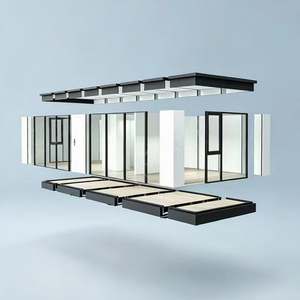

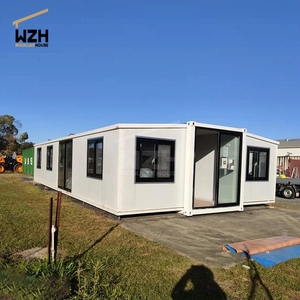
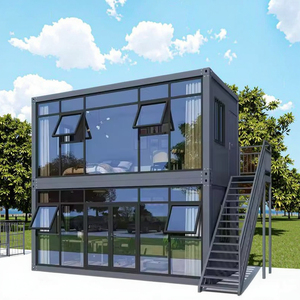
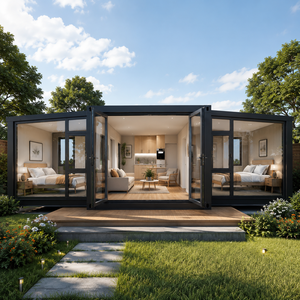
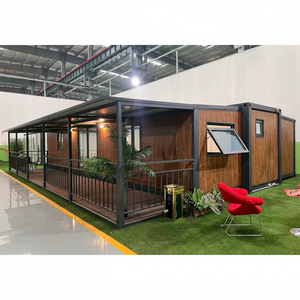
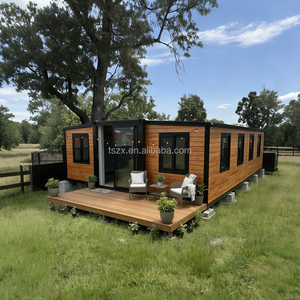
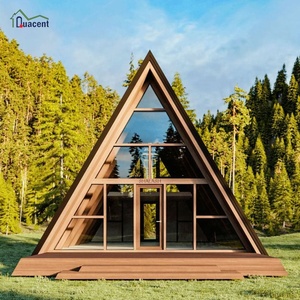
The rapid expansion of mining, energy extraction, and infrastructure initiatives across Siberia, the Russian Far East, and Arctic economic zones has elevated demand for heavy-duty, climate-adapted workforce accommodation. Establishing residential camps and administrative hubs in locations like Yamal, Norilsk, Neryungri, and Sakhalin presents daunting engineering hurdles: extreme sub-zero permafrost conditions, harsh wind shears, brief construction windows, and severe logistical constraints.
Leading Chinese workforce housing manufacturers have emerged as primary supply partners for Russian enterprise buyers. By pairing automated CNC steel fabrication with specialized thermal envelope engineering, top-tier Chinese exporters deliver pre-engineered, flat-pack, expandable, and modular container systems tailored specifically to Russian building codes (GOST-R, SP Technical Standards) and Arctic weather challenges.
Procuring Chinese modular housing reduces on-site construction timelines by up to 75% compared to traditional stick-built housing. By utilizing flat-pack shipping protocols (where 4 dismantled container units stack into a single ISO 20ft container footprint), logistics expenses via the Trans-Siberian Railway or Heihe-Blagoveshchensk river/bridge channels are drastically minimized.
Standard tropical or mild-climate modular container homes fail quickly when exposed to northern Russian winters. Thermal bridge collapse, interior condensation, roof deformation under heavy snow loads, and embrittlement of structural seals are common pitfalls of non-localized procurement. Chinese manufacturers specialized in the Russian market employ advanced technical countermeasures:
Substituting standard EPS with high-density injected PIR or Structural Insulated Panels (SIPs) achieves thermal conductivity as low as λ ≤ 0.022 W/m·K. Panel thicknesses are engineered up to 150mm–200mm for Arctic camps.
Galvanized structural steel columns utilize thermal break gaskets and non-conductive composite spacers to eliminate interior frost formation and stop heat transfer through exposed steel members.
Reinforced roof trusses withstand heavy snow accumulations up to 3.5 kN/m². Structures mount directly onto elevated pier foundations or helical ground anchors to prevent heat transfer into sub-surface permafrost layers.
Russian procurement teams must balance speed of deployment, transport volume density, and longevity. The table below outlines the core technical metrics across primary Chinese exporter model lines:
| Modular Type | Transport Footprint | Assembly Speed | Snow / Wind Load Rating | Best Russian Application Scenario |
|---|---|---|---|---|
| Flat-Pack Detachable Container | 4 Units per ISO Container | 3 Workers / 2 Hours per unit | 2.5 kN/m² / 150 km/h | Multi-story accommodation barracks & administrative complexes in mining towns. |
| Double-Wing Expandable House | 1 Folded Unit per 40ft HQ | 4 Workers / 1 Hour deployment | 3.0 kN/m² / 180 km/h | Rapid deployment command centers, medical posts, and executive quarters. |
| Space Capsule / Apple Pod | 1 Unit on Flat Rack Bed | Turnkey Crane Placement (30 mins) | 3.5 kN/m² / 200 km/h | Boutique eco-tourism, executive site manager housing, & high-visibility offices. |
| SIPs A-Frame Modular Villa | Bundled Panel Cargo | 3-5 Days site assembly | 4.0 kN/m² (Slope Shedding) | Extreme snowfall mountainous regions, resort retreats, and permanent residences. |
In coal, diamond, and gold extraction zones, companies require multi-building worker villages housing 500 to 3,000 personnel. Chinese exporters configure multi-tier flat-pack container clusters containing sleeping quarters, commercial kitchens, laundry hubs, and recreation halls linked by enclosed insulated walkways.
For crews expanding the Baikal-Amur Mainline or expanding Far Eastern maritime terminals, relocatable expandable container houses provide flexible accommodation. When a work sector wraps up, hydraulic expandable units fold back down to standard shipping dimensions for immediate rail transit.
Drilling operations on the Gydan Peninsula demand gas-heated, heavily insulated mobile pods. Double-gasket seals along with anti-freezing plumbing systems ensure operational efficiency at sustained temperatures below -45°C.
The rise of domestic eco-tourism around Lake Baikal and Altai Mountains has sparked adoption of futuristic space capsules and Apple Pod cabins. Featuring panoramic tempered glass and smart integrated climate systems, these units deliver luxury experiences in remote natural settings.
Successfully delivering modular housing from Chinese manufacturing hubs (in Shandong, Jiangsu, Guangdong, and Hebei) into the Russian interior requires experienced supply chain coordination:
Top Chinese modular housing manufacturers leverage vast industrial capabilities to meet international project requirements:
Clear technical and logistical answers to help procurement managers evaluate China-to-Russia modular housing projects.
Export units destined for Northern Russia feature upgraded Arctic insulation specs. This includes 150mm to 200mm high-density Polyisocyanurate (PIR) or Rockwool sandwich panels (λ ≤ 0.022 W/m·K), thermal break framing, triple-pane Low-E argon-filled windows, and integrated floor heat insulation. Heated water supply pipes and freeze-proof drainage vents prevent ice blockages during extreme freezes.
Yes. Qualified exporters pre-install wiring, circuit breakers, switches, and sockets designed for 220V/380V at 50Hz, fully adhering to Russian electrical safety norms. Cable runs use flame-retardant, low-smoke insulation (GOST compliant). Plumbing uses frost-resistant PEX or PPR piping with standard Russian thread sizes for easy connection to municipal or camp microgrid systems.
For Flat-Pack Detachable Containers, exactly 4 complete units pack into the dimensions of a single 20ft ISO standard shipping container (SOC format). For Expandable Container Houses, 1 folded unit fits into a 40ft High Cube container. This high transport density drastically reduces cross-border freight costs via rail (Zabaikalsk) or truck (Heihe).
Permanent concrete foundations are not required. Modular container units can be set on helical earth screws, precast concrete pad blocks, or raised steel pier grids. Raising the unit 30cm to 60cm off the ground forms a cold-air gap that prevents ambient building heat from thawing the underlying permafrost layer, ensuring long-term structural stability.
Leading Chinese manufacturers support direct RMB (CIPS) bank transfers, eliminating Western currency intermediary friction. Production lead time for standard camps (100–300 units) is typically 15–20 days. Transit time via rail or overland cross-border trucking into Central Russia ranges from 12 to 22 days depending on destination customs clearance speed.
Yes. Structural flat-pack container frameworks are engineered with corner casting posts capable of supporting up to 3-story stacks without additional exterior scaffolding. External or internal insulated staircases, corridors, and central lobby modules are custom-fabricated to complete multi-level accommodation complexes.
Contact our modular housing engineering team today for technical CAD layout drawings, sub-zero insulation specs, and direct factory RMB pricing.
Get a Quote